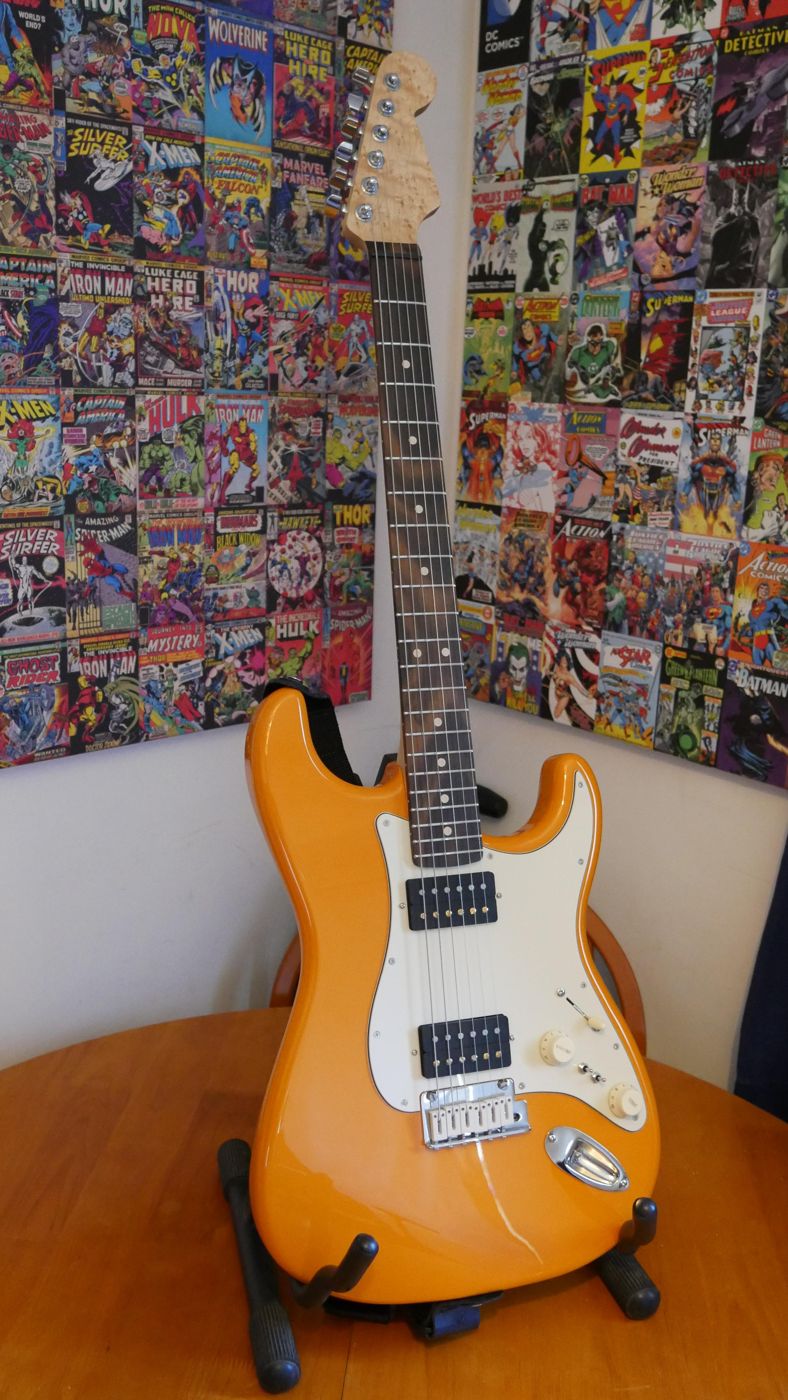
Strat comfort, PRS voices.
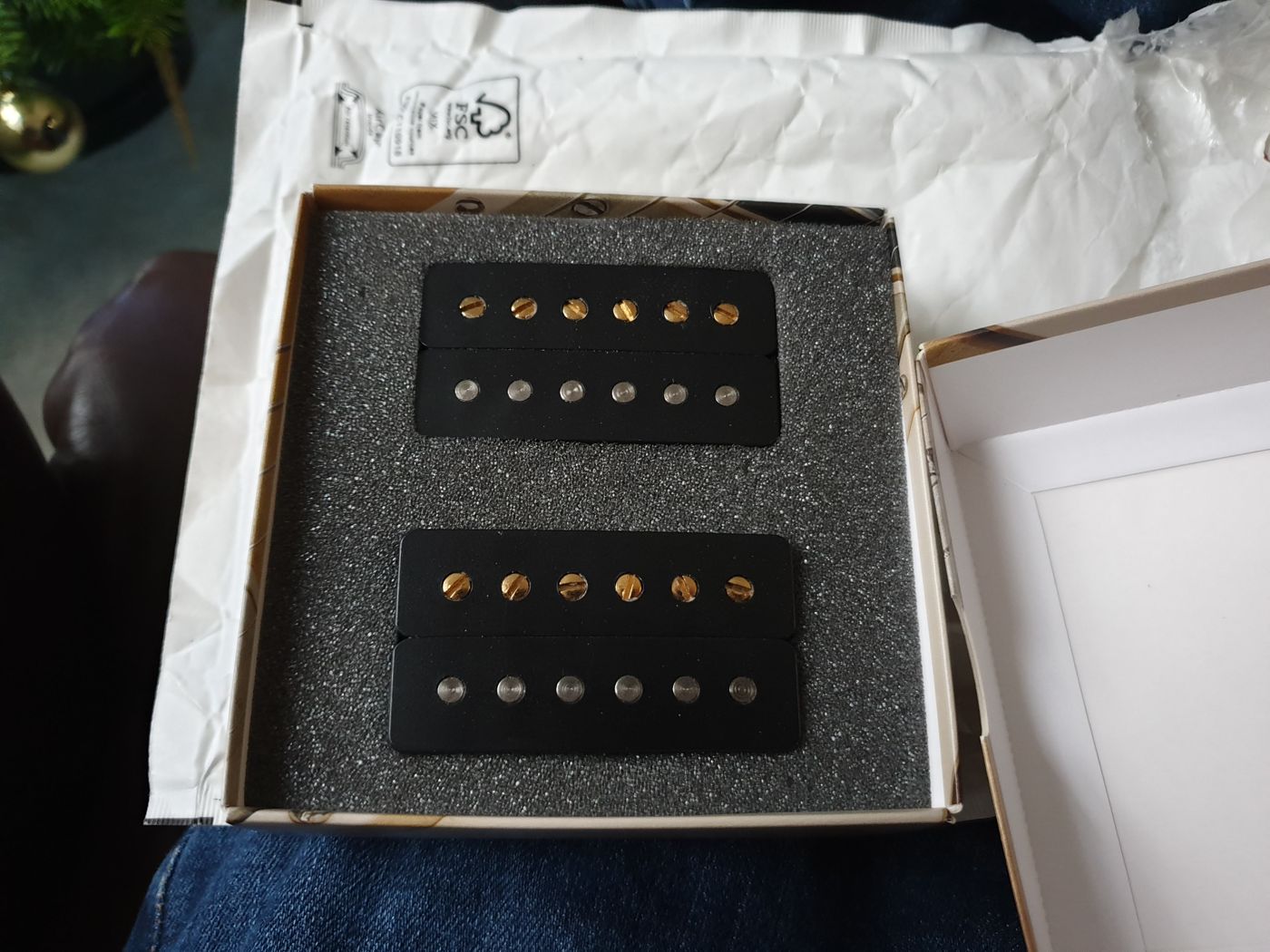
It began with pickups too interesting to leave unused — rare PRS 85/15 MT Artist Package humbuckers from a Custom 24-08. The build grew into a personal Fender/PRS hybrid.
A delayed Warmoth body from Australia was set aside when a Fender Player Capri Orange body arrived and became the guitar's identity. Along the way: neck repair, Tru-Oil finishing, fret levelling, complex wiring and setup. The result delivers Strat scale length and comfort with fifteen PRS-style voicings.
Pickups looking for a guitar
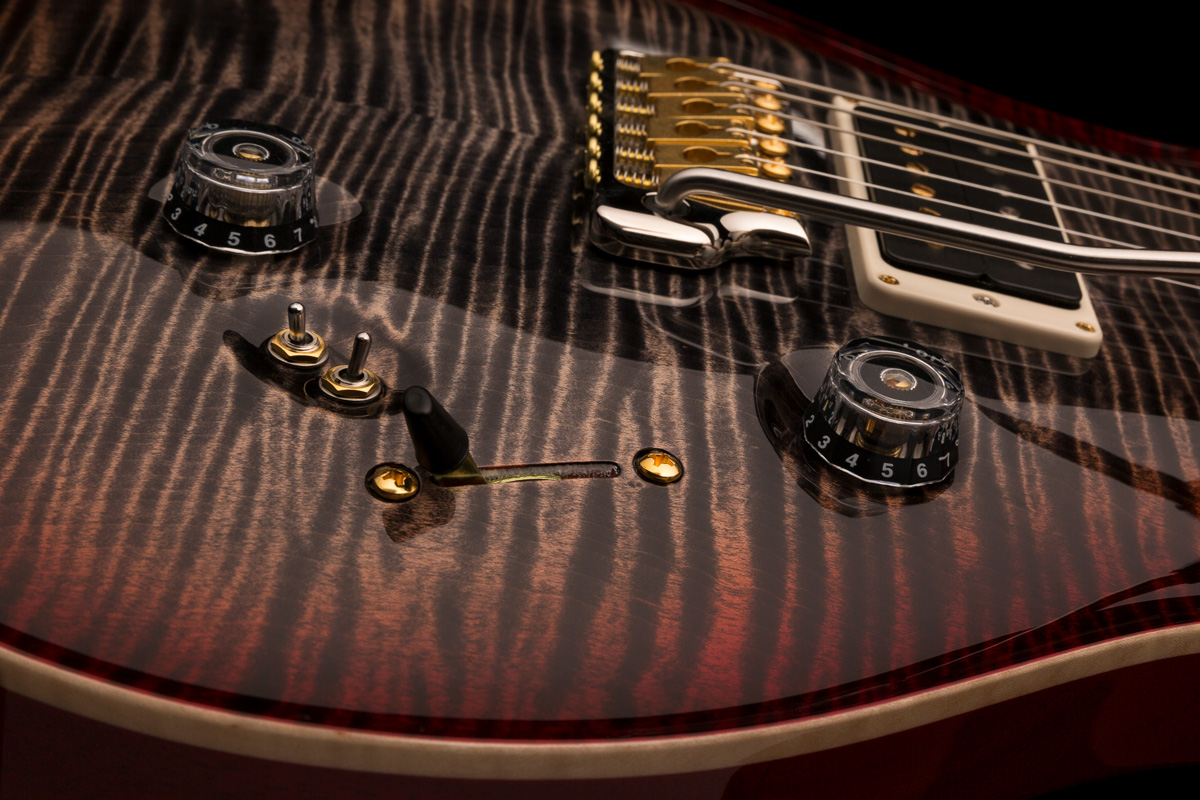
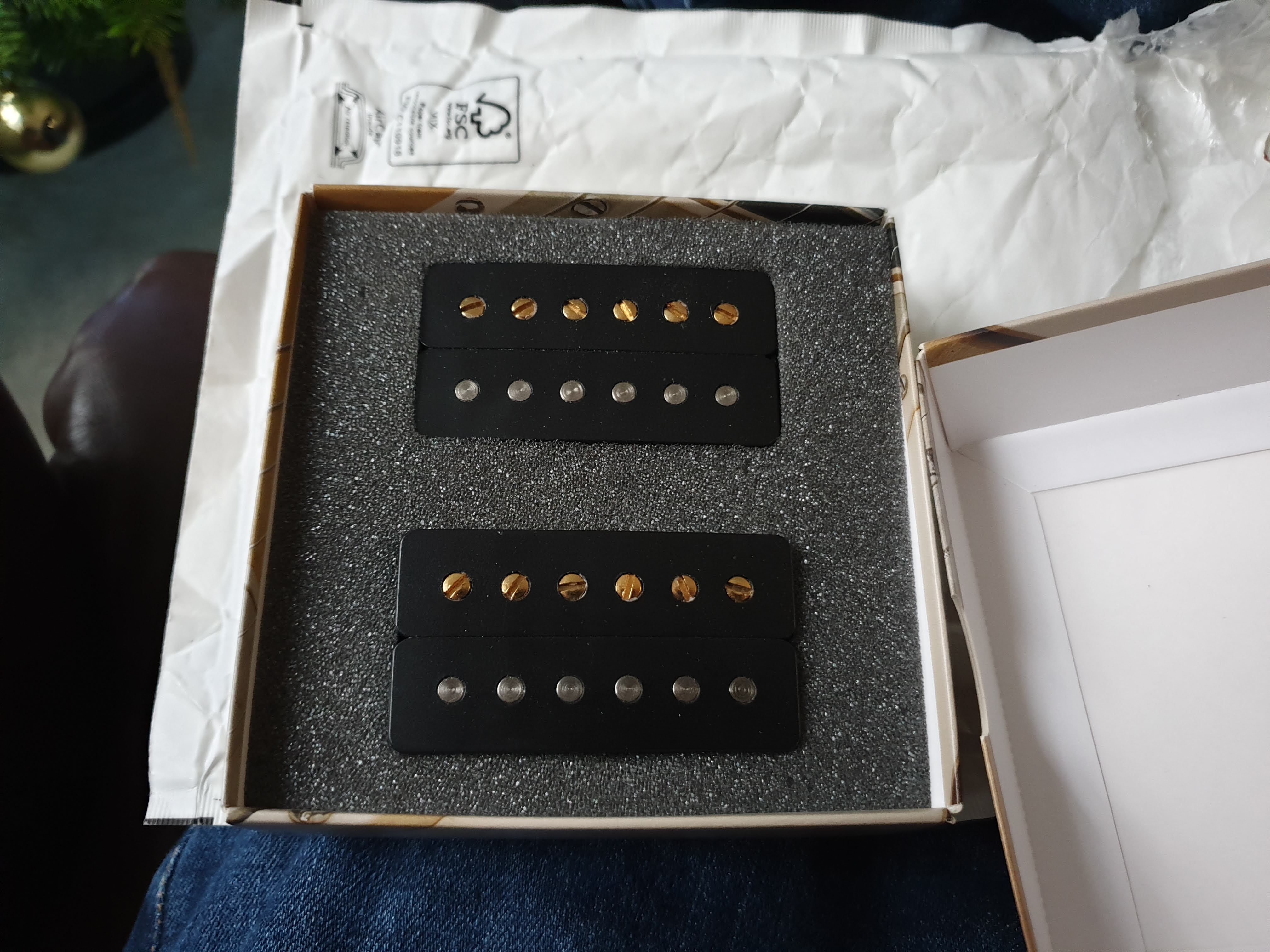
It started, as these things often do, with parts. I had a set of PRS 85/15 MT Artist Package pickups that had come out of a Custom 24-08. They're not your usual humbuckers: they're four-conductor, and they have extra windings on the slug side, so when you split them you get a fuller, less thin single-coil sound than most splits manage.
The obvious home for them was my own PRS Custom 24, but that already had 59/09s in it and I didn't want to start modding a guitar I loved exactly as it was. So the question became: what if I built something around them instead?
The idea that stuck was simple to say and harder to do: the feel, comfort and scale of a Strat, with the voice of a PRS.
Sketching the idea
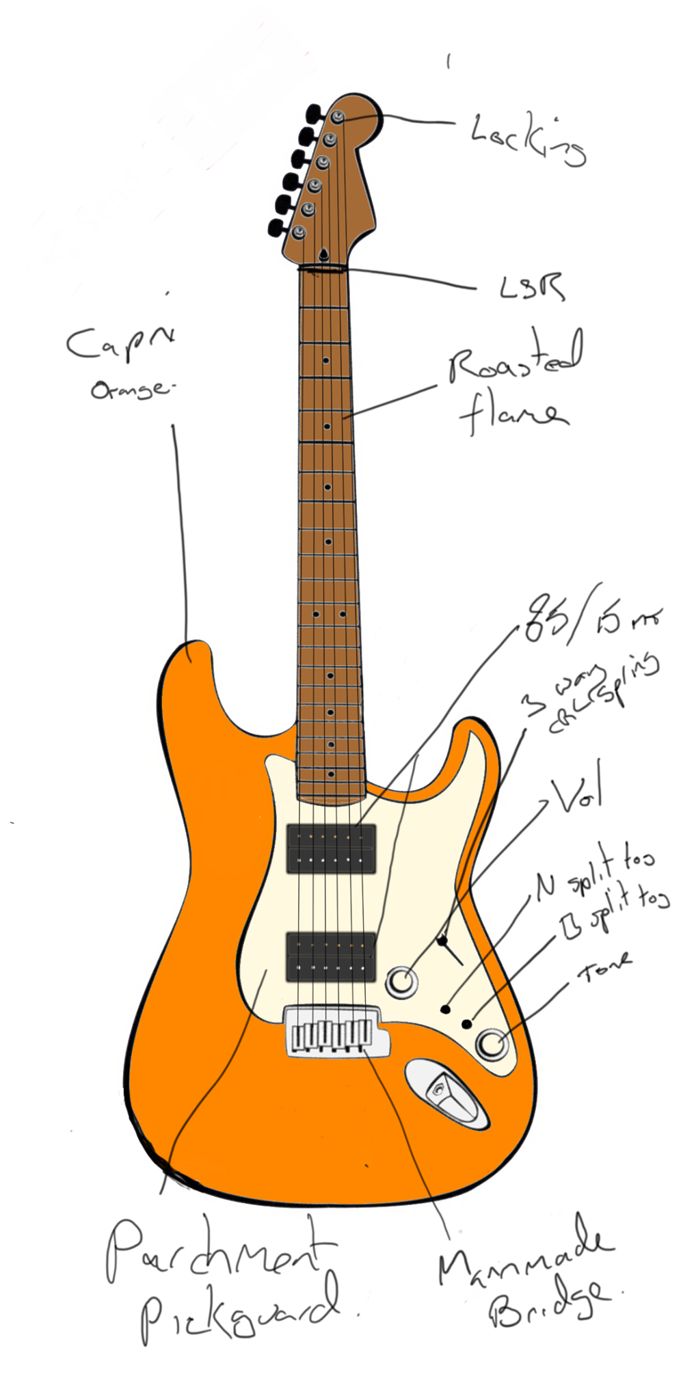
Before buying anything else I sketched it out. A Strat-style body and neck, two humbuckers instead of three single coils, and a way of getting at all the different sounds those four-conductor pickups could make without turning the guitar into a switchboard.
Having it on paper helped me work out what actually mattered: comfort first, then tone, then looks. Everything after this point was really an attempt to make that sketch real.
A body from Australia
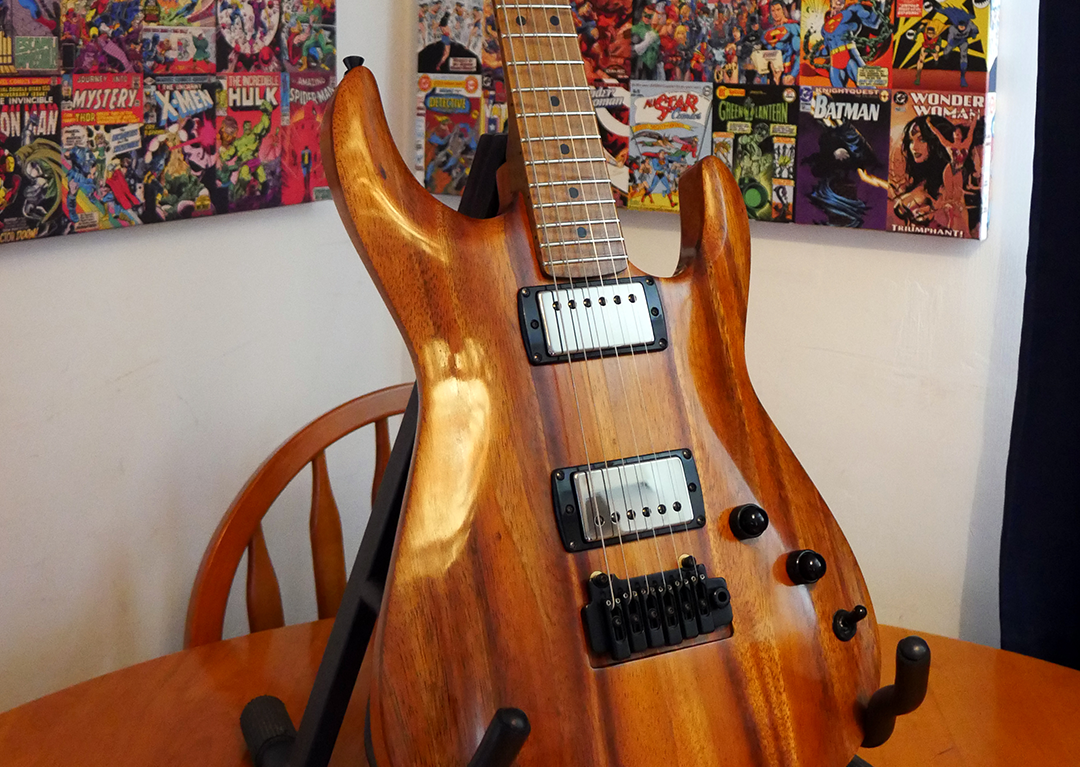
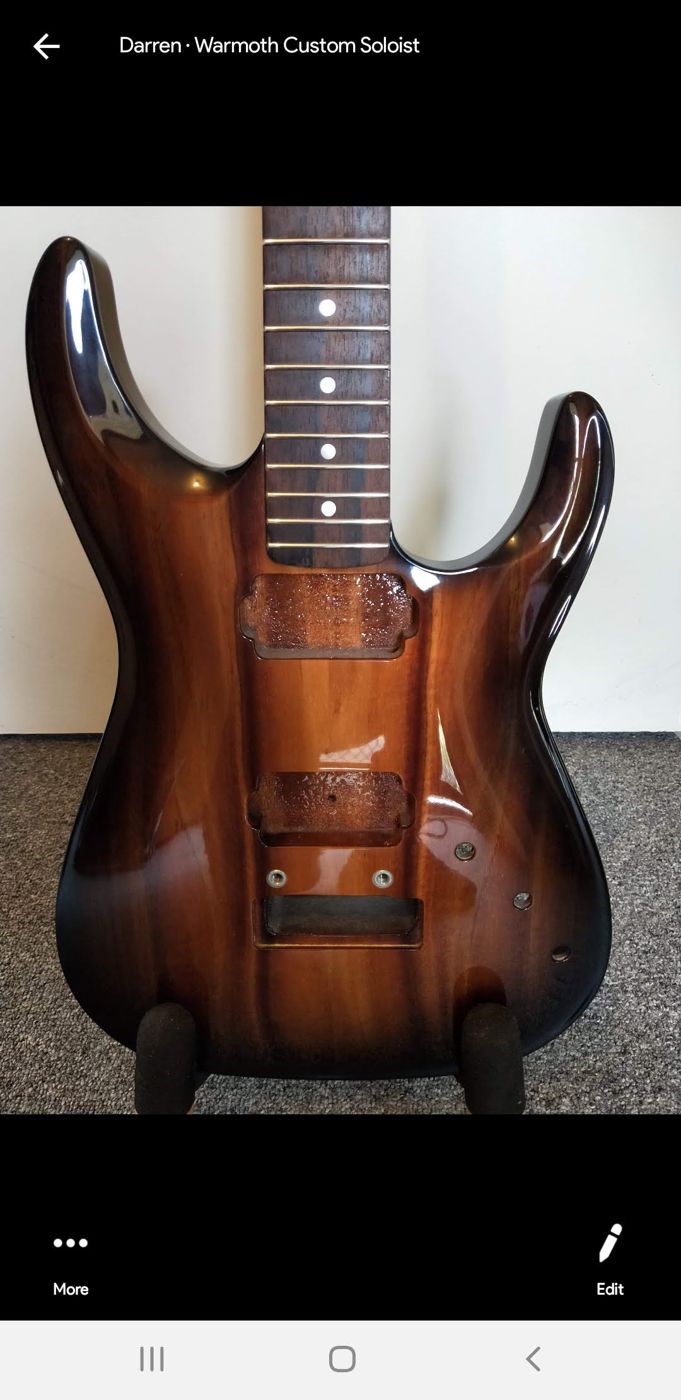
The first body I bought was a Warmoth mahogany Soloist with a flamed koa top and a black burst, from Paul (Nexrex on the forums) in Australia. It looked stunning in the listing and it was a good price.
Paul posted it with AusPost's value service right at the start of COVID. Then it simply vanished. For months there was no trace of it, and the build stalled before it had properly started.
The 'bedroom use only' neck
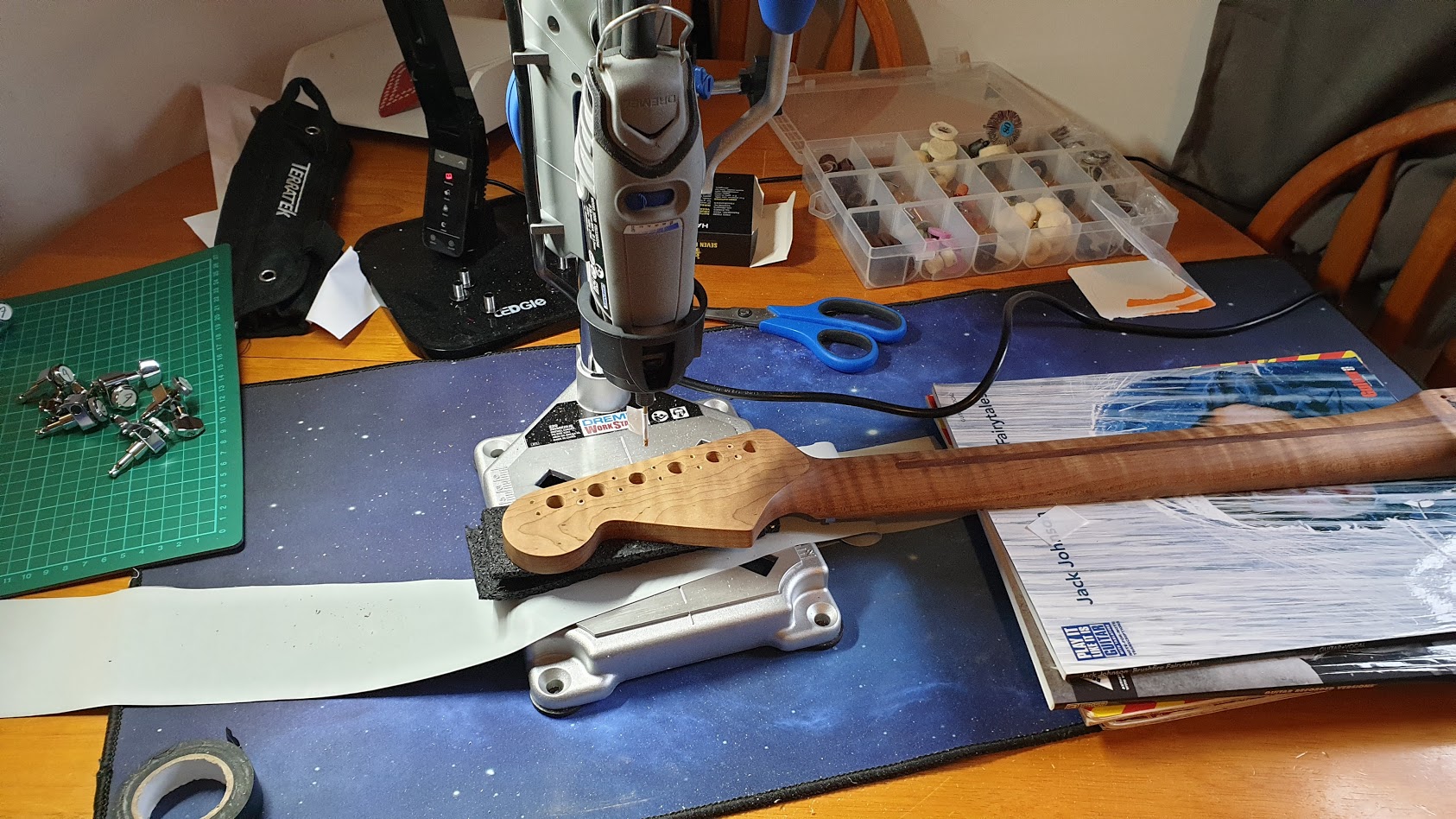
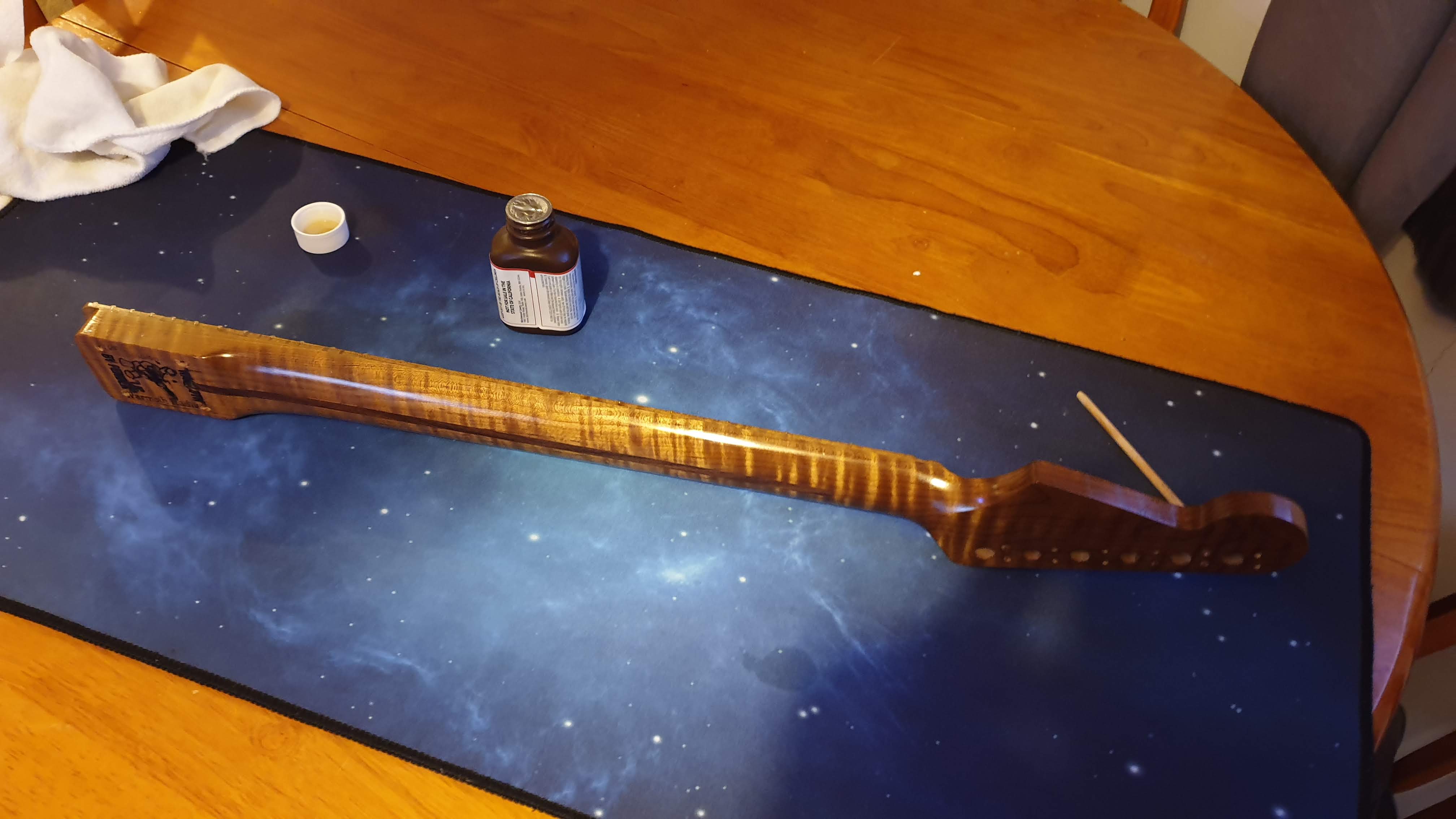
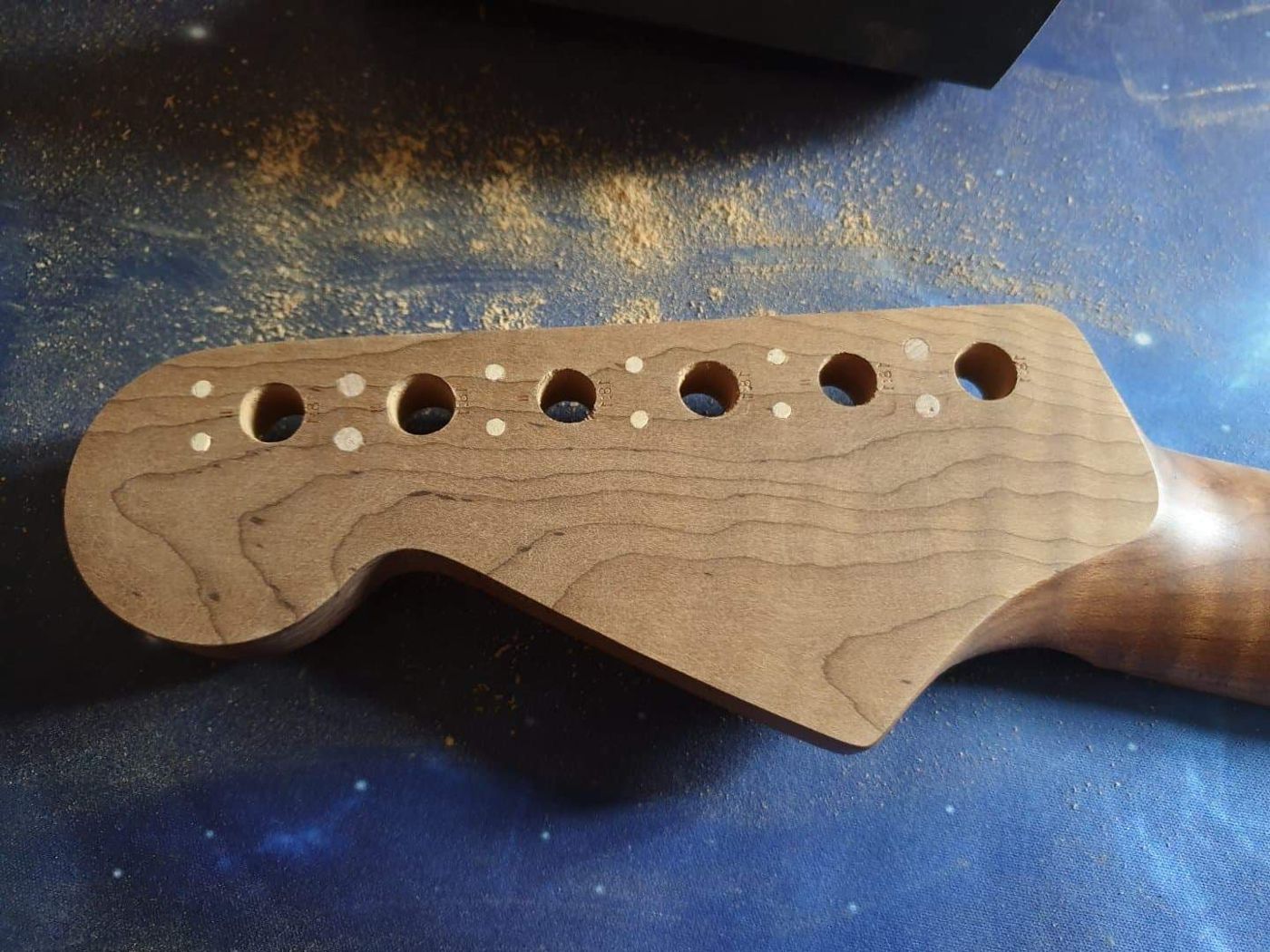
While waiting, I found a roasted flame maple Warmoth neck with locking tuners and an LSR roller nut, sold as 'bedroom use only', for £300. When it arrived it was chipped at the nut, the tuner pin holes had been drilled out to around 4mm, and it had a fair few dings.
The seller refunded £90, and once you take the tuners and nut into account the neck itself worked out at about £110. So rather than send it back, I decided to fix it.
I filled the oversized pin holes with dowel and re-drilled them, softened the damaged area around the nut, and rolled the fretboard edges so it felt played-in. My first real bit of guitar repair, and a confidence boost.
Roasted flame and Tru-Oil
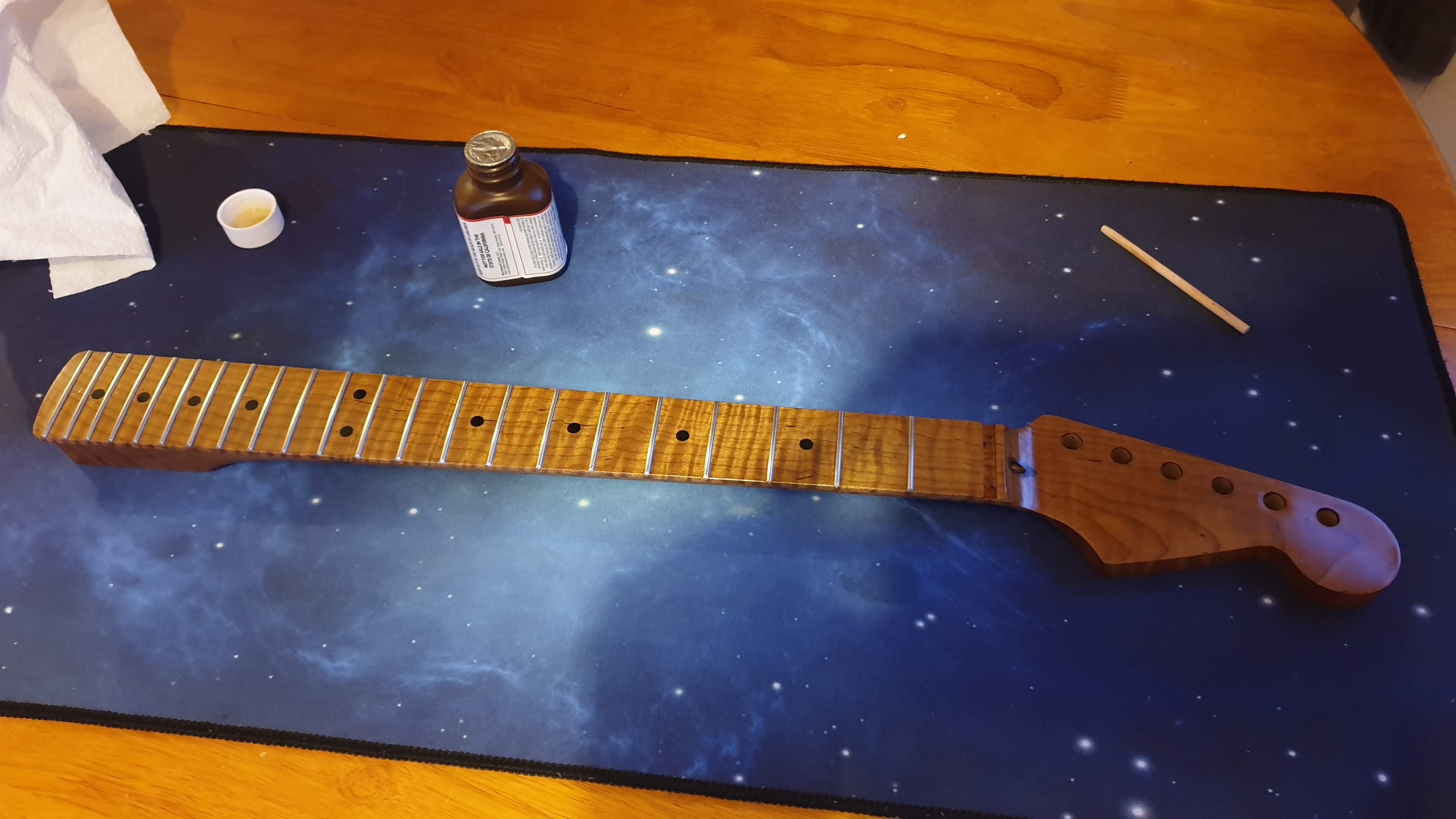
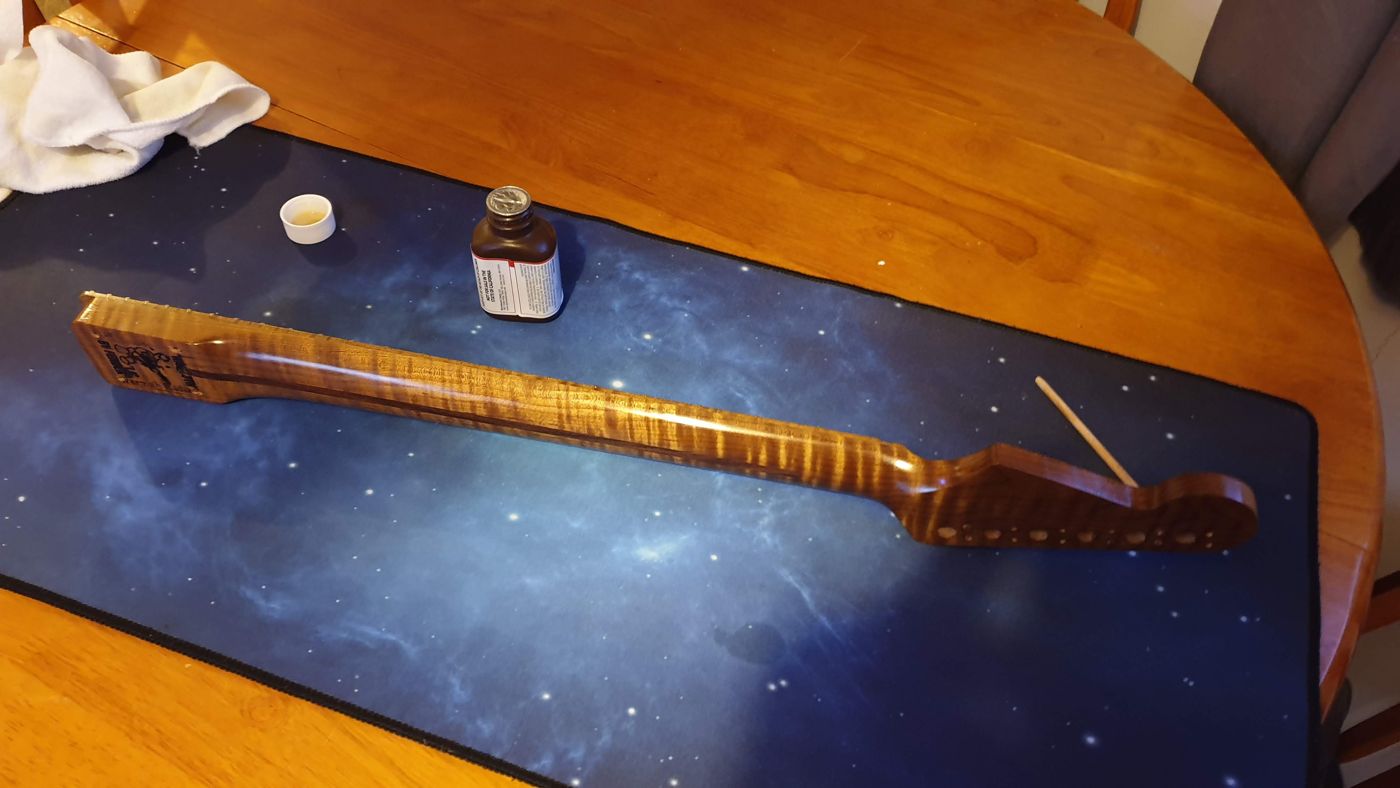
With the repairs done, the neck needed a finish. I went with Tru-Oil, building it up in thin coats so it stayed fast and natural under the hand rather than thick and sticky.
Roasted maple goes a lovely caramel colour, and the oil brought the flame out properly. It was the first time I'd used Tru-Oil, and it wouldn't be the last.
A temporary body
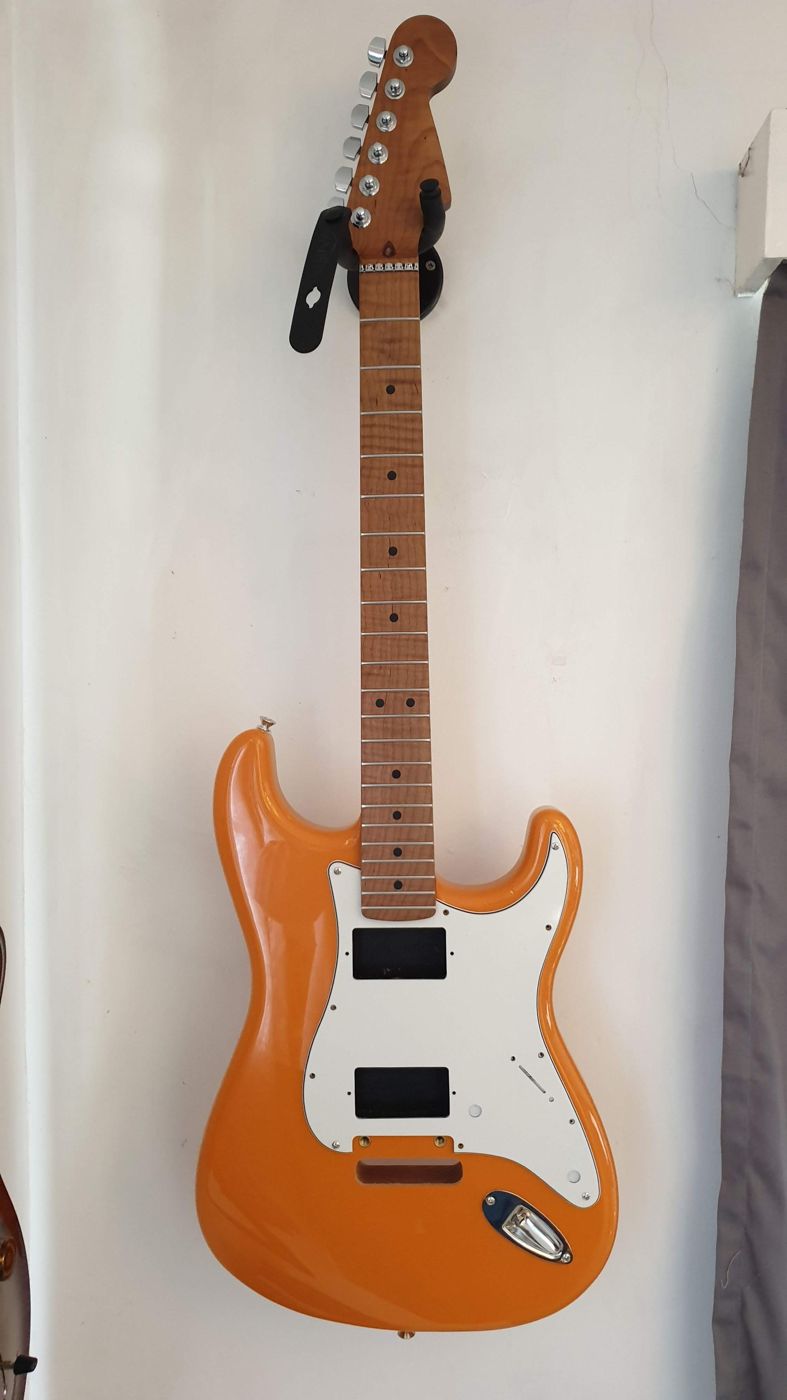
With the Soloist still lost somewhere, I bought a Fender MIM Player body in Capri Orange from Stratosphere on eBay: $180, plus $52 tax and $16 postage. It turned up in about ten days. It was only meant to be a stand-in so I could get the electronics working.
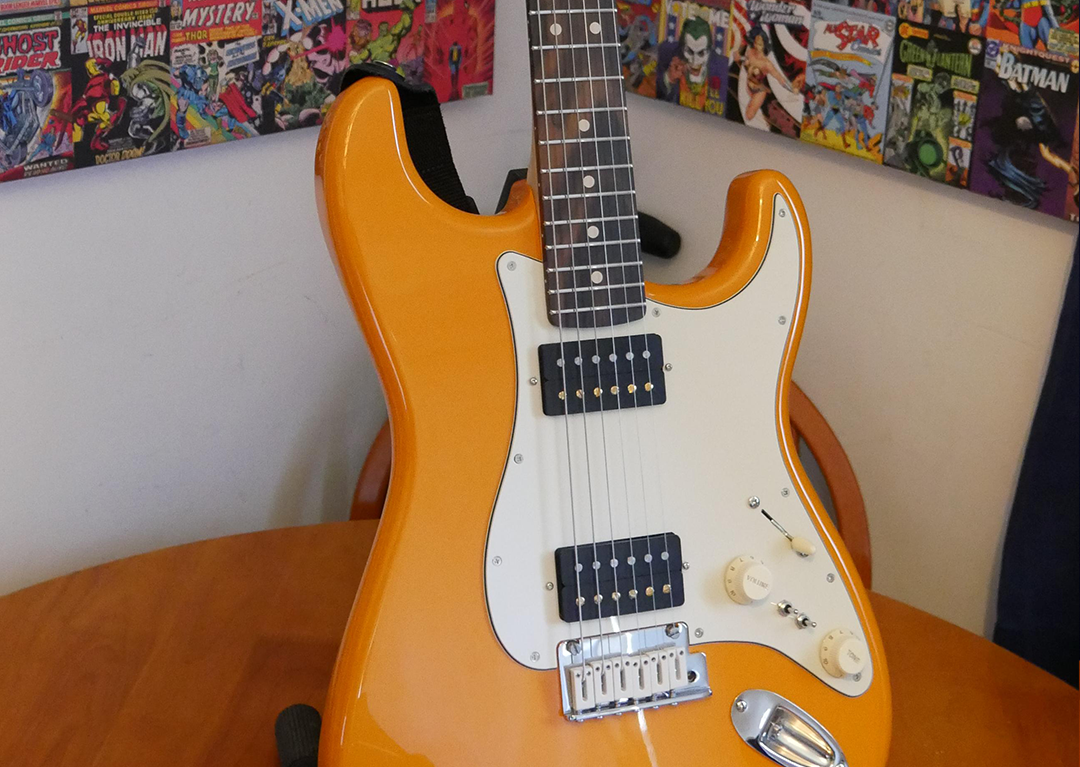
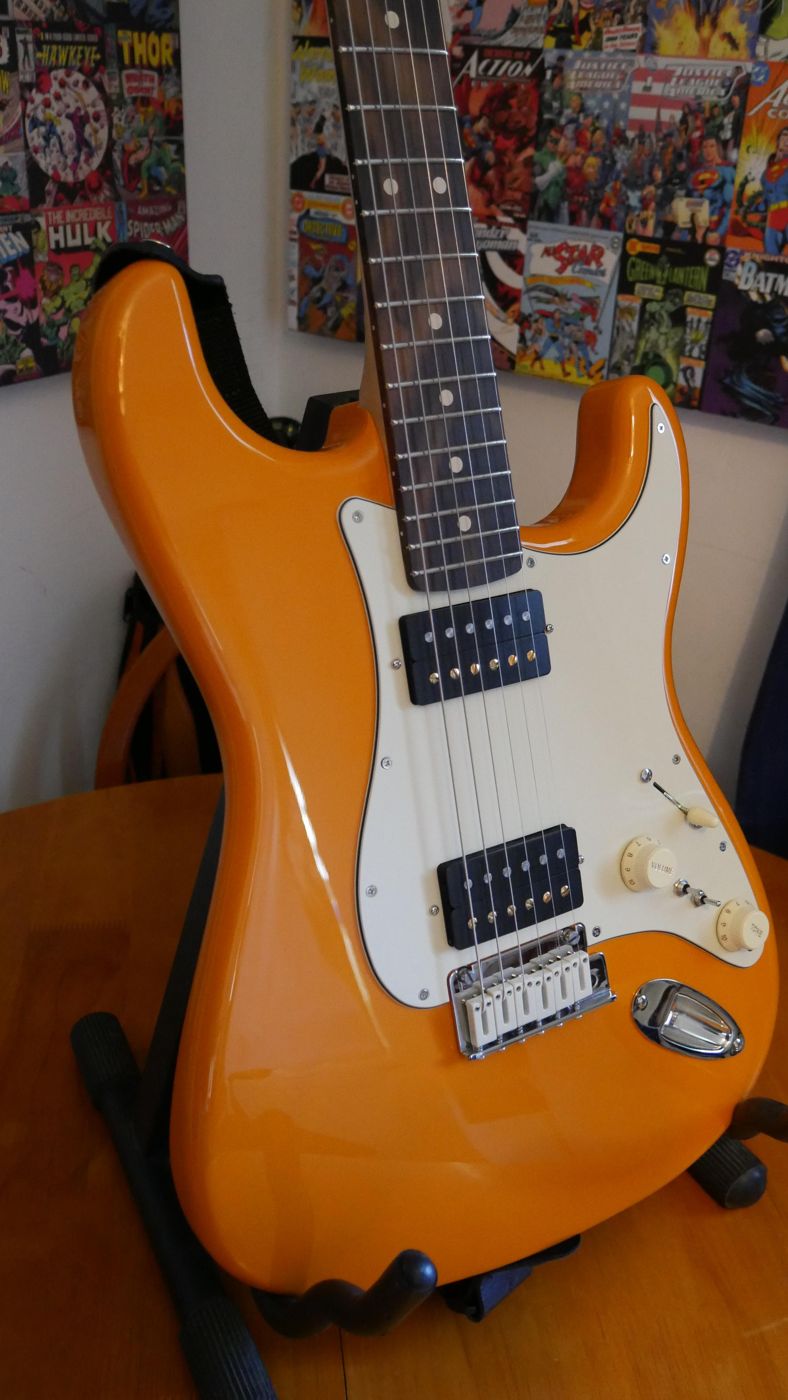
It ended up being the guitar. The orange with the roasted neck just worked. I agonised over the details: a pure white pickguard looked too stark and parchment too bright, so I settled on aged white, with matching aged white soft-touch knobs and Graph Tech TUSQ saddles.
Fifteen voicings
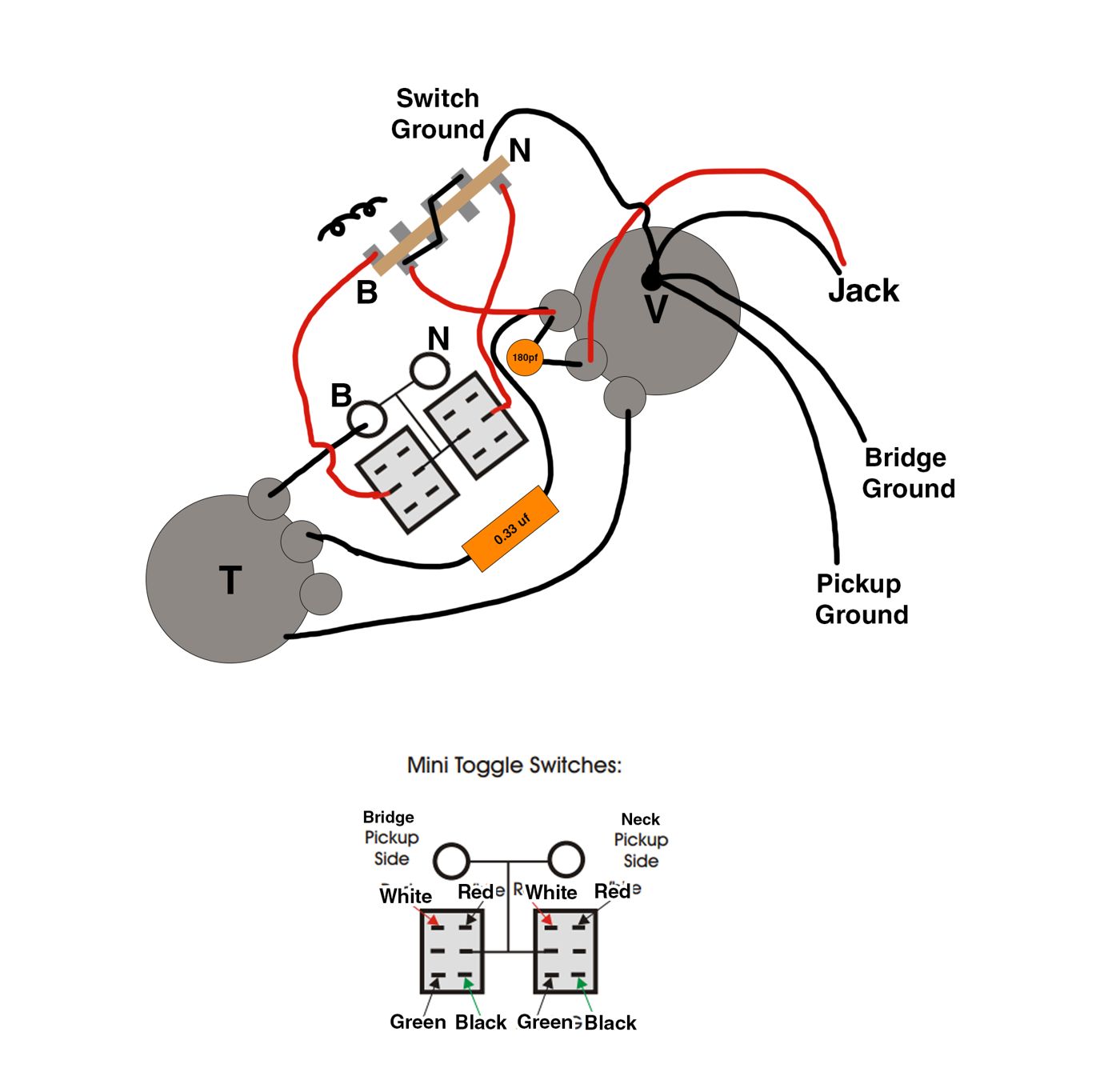
This was the heart of the project. I measured the resistance of each coil to understand what I was working with, then designed the wiring around two on/on/on DPDT mini-toggles, one per pickup, alongside the standard three-way selector.
Each toggle gives three modes per pickup, and three modes on each of two pickups across a three-way switch gives fifteen voicings. The middle position on each toggle is a hybrid mode I hadn't heard elsewhere, and it became my favourite.
The soldering taught me a lot. The DPDT lugs are tiny, so it's about two seconds at 400°C and no more. Don't over-tin. Keep a multimeter to hand. Most of all, understand the circuit rather than following a diagram blindly, because when something doesn't work you need to know why.
The lost body turns up
After three and a half months, the Soloist finally arrived, in a crushed box and with a ding on the top horn. I tried a dye and lacquer repair, but the clear nail varnish I used never cured properly.
By then the Capri Orange body had become the Strat's identity anyway, so the Soloist was set aside. It wasn't the end of its story, though: it became the Coca Koa project.
First notes
The rest came together with a Fender American Series two-point tremolo and five springs. All in, the build cost almost £900, which is not a cheap guitar, but it's exactly the guitar I wanted.
It sounds more PRS than Strat, which was the point. The hybrid mode is full, bright and articulate, and the splits sound like proper single coils rather than thin compromises.
Sharing it on the forums, someone pointed out that Zhangbucker's 'Splat' had been a similar idea. It was my third Warmoth-style Strat, but the first one that felt truly my own. Names floated around: 'The Dreamsicle', or 'Orange Split', the UK name for the ice lolly and a pun on the coil split.
A second neck
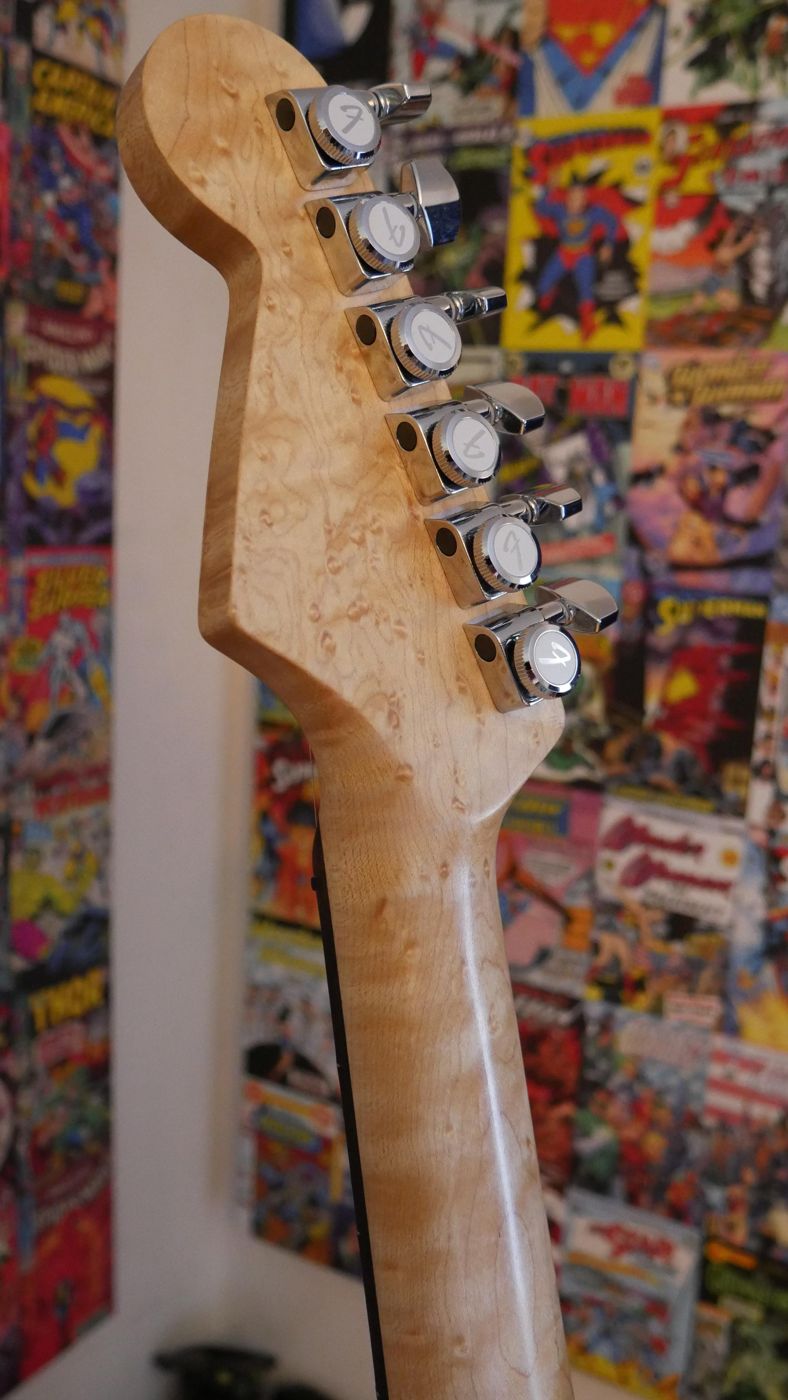
I still wanted a neck that was mine from new. I ordered a Warmoth bird's-eye maple neck with a ziricote fretboard: $310 plus $90 shipping, then around £81 in customs, and five weeks of waiting. The bird's-eye was a nod to my guitar teacher's Music Man Axis Super Sport.
I finished it with Tru-Oil cut 3:1 with mineral spirits, around twenty coats, used lemon oil on the ziricote, and rolled the edges again.
Levelling the frets
For my birthday I got a set of fretwork tools: a notched straight edge, a fret rocker, a levelling beam and a crowning file. The frets on the new neck weren't level from Warmoth, so it was the perfect first job.
The level, crown and dress took about four hours. Then the neck went on with no drama at all. The roasted flame neck moved on to another project, and the Strat was finished: Strat comfort, PRS voices.